
Building blocks for AI products that you run yourself
Six open-source projects that fit together: one gateway for every model, one sign-in for every product, the platforms you build on top of them — agents, content and knowledge — and benchmarks that measure the gateway.
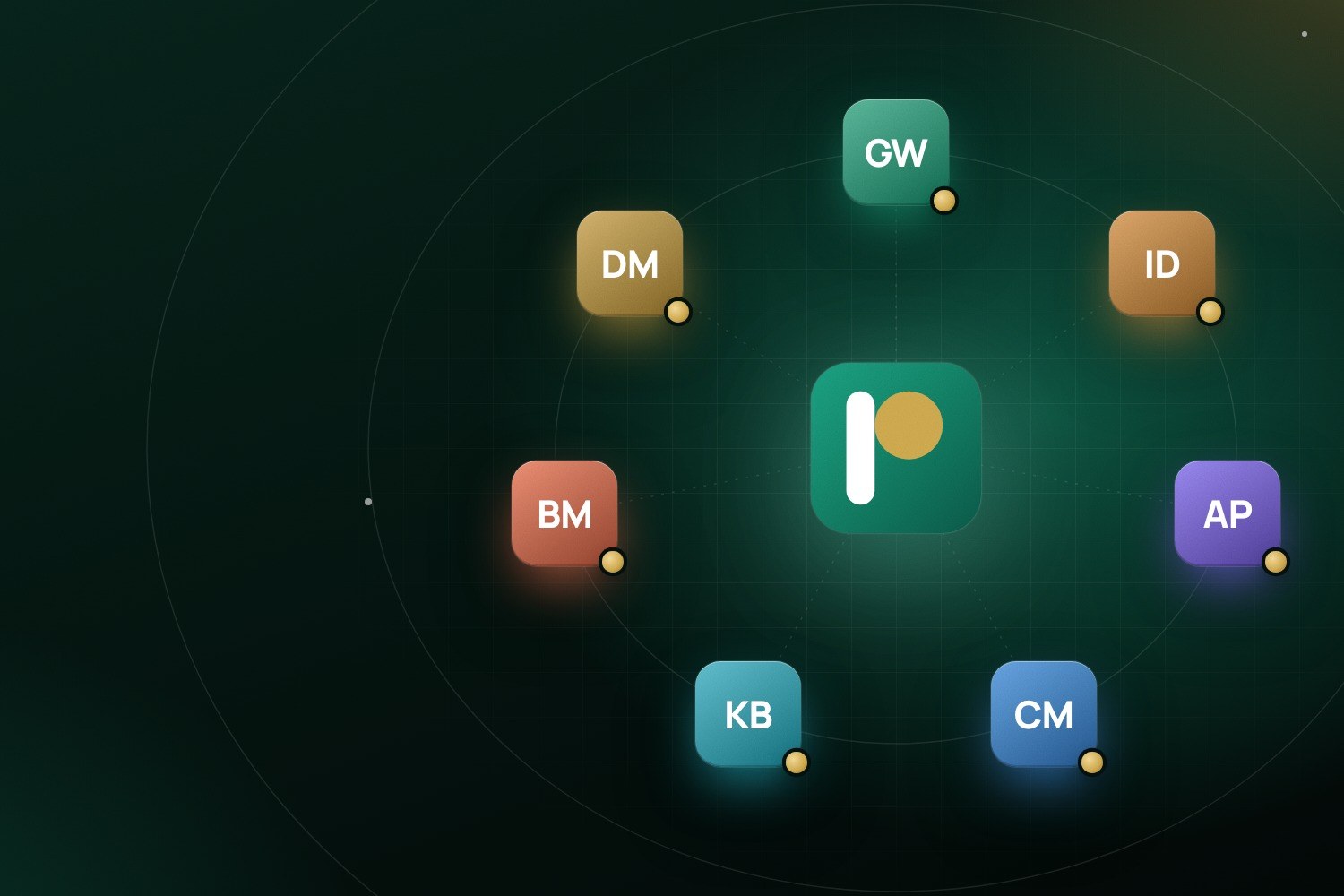
The projects
Use one on its own, or run them together. Each is a complete product with its own repository, documentation and Docker setup — and pacod-demo runs all six as one platform.
pacod-gw
AI gateway. One gateway in front of every model — with the keys, prices, quotas and usage your applications should not have to hold.
pacod-cms
Content management. One stack, many editorial websites — articles, advertising and statistics, with AI writing, design and translation built in.
pacod-ap
Agent-building platform. Host any number of AI agents on one deployment — each with its own knowledge, facts, prompts and rules, behind one sign-in.
pacod-id
Identity and access. One place where people and machines sign in — and where it is recorded what they may do, across all your products.
pacod-kb
RAG knowledge base. Turn files and web pages into versioned, searchable knowledge — with a stable contract for the models that read it.
pacod-benchmark
Gateway benchmarks. Measure what the gateway adds — in many configurations at once, each against a baseline straight to the mock.
pacod-demo
The whole stack. All six projects working as one platform — one domain, one sign-in, one gateway. Try it at demo.pacod.io.
How they fit together
Every LLM call goes through the gateway. Every person signs in through the identity provider. The products on top stay simple — and never hold a provider's key. Run together, they share one of each common component: one edge, one database server, one vector store, one set of dashboards.
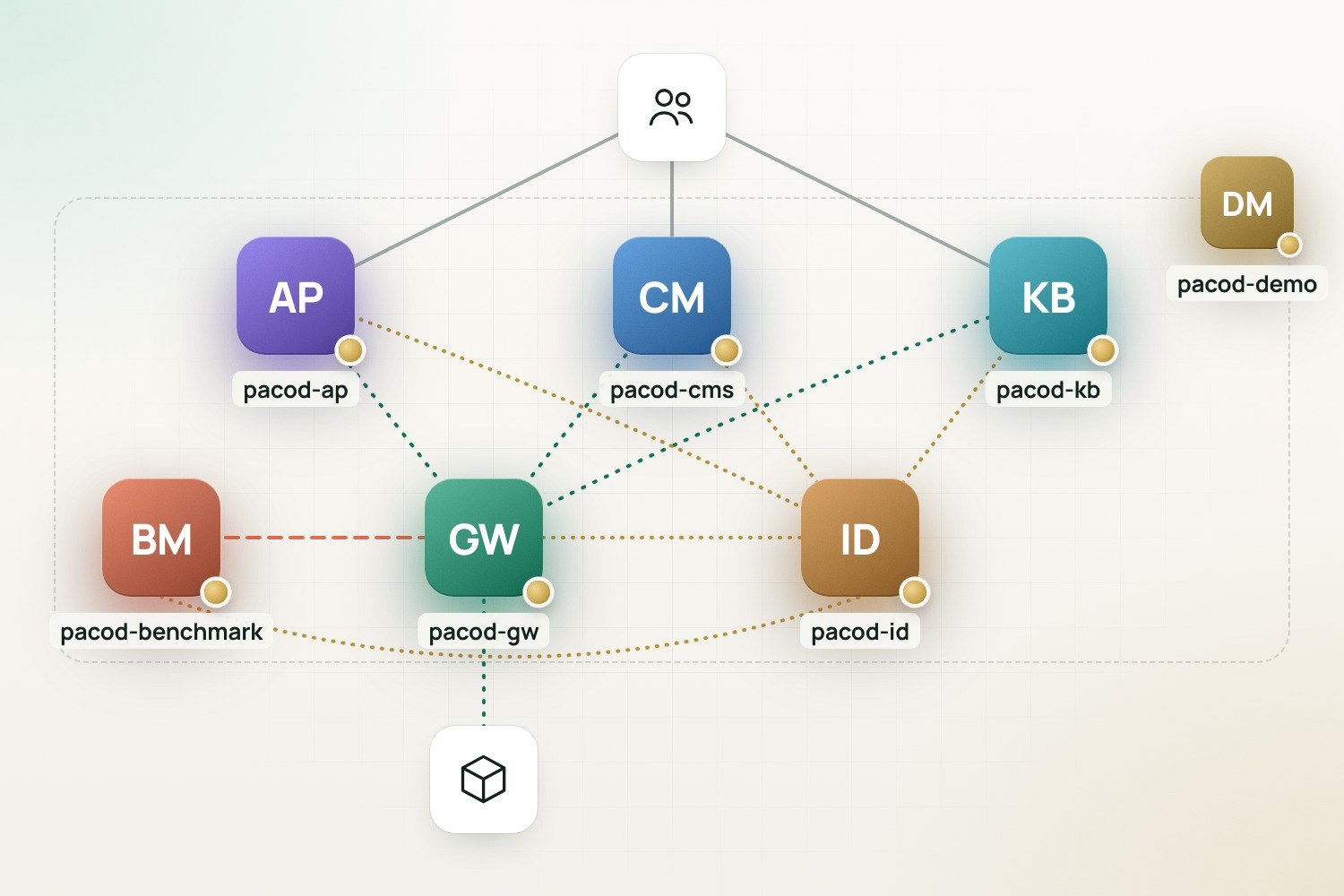
Built on a few firm ideas
Open source
Apache-2.0 licensed, with the source, the tests and the threat models in the open.
Self-hosted
Docker Compose for a laptop, Helm charts where it matters. Your data stays on your machines.
One sign-in
pacod-id signs people in to every product and records what they may do.
One gateway
pacod-gw holds the keys, prices the calls and enforces the quotas — for every product.
See them running together
The live demo runs all six projects as one platform, behind one sign-in. On your own machine, pacod-demo starts the same stack with one make, and each project also runs alone with a mock model provider, so nothing leaves your machine until you want it to.